
Enhanced Recovery After Surgery(ERAS) Protocol
Enhanced Recovery After Surgery (ERAS) is a modern, evidence-based perioperative care approach designed to improve surgical outcomes, reduce complications, and shorten hospital stays. It focuses on optimizing every stage of the patient’s surgical journey — from preoperative preparation and intraoperative management to postoperative recovery. By combining multidisciplinary strategies such as patient education, early nutrition, pain control, and early mobilization, ERAS protocols promote faster healing and enhance overall patient satisfaction. Widely adopted in general surgery, ERAS represents a shift from traditional care to a faster, safer, and patient-centered recovery process.
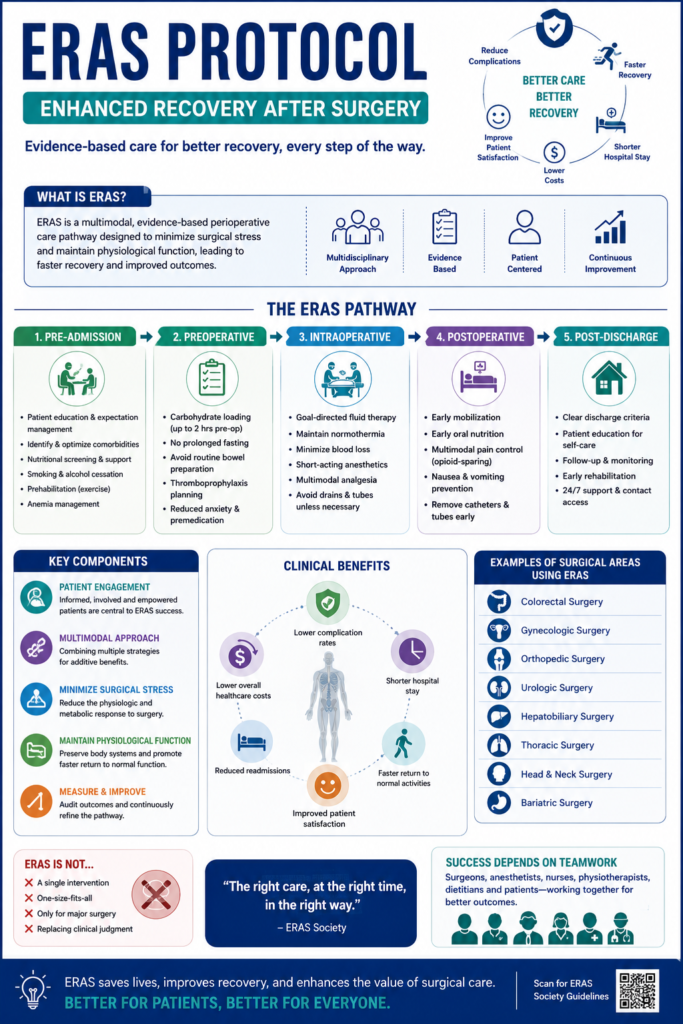
Stepwise Flowchart
1. Preoperative Phase
Objective: Optimize the patient’s physical and psychological readiness for surgery.
Patient Education:
Counseling about surgical procedure, expectations, and recovery goals.
Involvement in shared decision-making to reduce anxiety.
Nutritional Optimization:
Screening for malnutrition; initiation of nutritional supplements if required.
Carbohydrate loading 2–3 hours before surgery to reduce insulin resistance.
Prehabilitation:
Encouragement of mild exercise and smoking cessation.
Control of chronic diseases (diabetes, hypertension, etc.).
Avoid Prolonged Fasting:
Clear fluids allowed up to 2 hours and solids up to 6 hours before anesthesia.
2. Intraoperative Phase
Objective: Minimize surgical stress and maintain physiological stability.
Anesthetic Strategy:
Use of multimodal anesthesia and regional blocks to reduce opioid use.
Maintenance of normothermia and normo-volemia.
Surgical Technique:
Preference for minimally invasive or laparoscopic approaches.
Gentle tissue handling and reduced operative time.
Fluid Management:
Goal-directed fluid therapy to prevent overload or hypovolemia.
Infection Prevention:
Antibiotic prophylaxis within 60 minutes of incision.
Strict aseptic measures and temperature regulation.
3. Postoperative Phase
Objective: Promote early recovery and reduce hospital stay.
Pain Control:
Use of non-opioid analgesics (NSAIDs, paracetamol) and regional anesthesia.
Early Nutrition:
Initiate oral fluids within 24 hours post-surgery.
Gradual advancement to solid diet as tolerat
Early Mobilization:
Encourage sitting up and walking within 6–12 hours after surgery.
Drain and Catheter Management:
Remove unnecessary tubes and catheters early to reduce infection risk.
Glycemic and Fluid Control:
Maintain blood glucose and fluid balance to support healing.
Thromboprophylaxis:
Use of compression devices and pharmacologic agents as indicated.
4. Discharge and Follow-Up
Objective: Ensure safe transition from hospital to home recovery.
Discharge Criteria:
Stable vitals, controlled pain, adequate oral intake, and independent mobility.
Patient Instructions:
Education on wound care, medication adherence, and warning signs.
Follow-Up Plan:
Early postoperative follow-up (usually within 7–10 days).
Assessment for complications and reinforcement of recovery guidance.